Sunday, June 6, 2010

Talk About Putting a Positive Spin on Things


A recent quote from BP CEO Tony Hayward, who must be wearing very intensely rose-colored glasses:

"We're going to clean up the oil, we're going to remediate any environmental damage and we are going to return the Gulf coast to the position it was in prior to this event. That's an absolute commitment, we will be there long after the media has gone, making good on our promises."

1.) Maybe Tony will let me wave his magic wand and see if the Amazon rainforest restores itself to its former glory.

2.) "...we are going to return the Gulf coast to the position it was in prior to this event." Does that include resuscitating the thousands of animals killed as a result of this absolute catastrophe? Does that also include providing financial compensation to the families whose livelihoods will now be in jeopardy?

3.) It's not hard to spot PR language a mile away. It looks like it'll take more than a British accent to get people excited about what Mr. Hayward has to say.

Petrol-basted mahi-mahi, anyone?

I'm All Eyes


Why is it that you can usually feel someone's eyes on you, even if you're turned the other way? Do some people stare because they don't know any better? Do some people stare, despite the fact that they know better, because they're insecure? Have you ever caught someone looking at length at you, looked back at them, and they quickly turned away, somewhat ashamed? Have you ever done that and the person kept staring back unabashedly? Have you ever had a "stare down" with someone on public transportation? (It seems that a lot of fixed gazing occurs on public transportation, where people often have nothing better to do than check out those around them.) Is staring a compliment? An insult? A threat? Do you stare at people, and if so, when and under what circumstances do you catch yourself doing it? Do men stare more than women, or vice versa? If someone is making you uncomfortable with their eye behavior, is it acceptable to say something to them ("say something" could mean calling them out, or simply saying hello)? Is staring unavoidable because humans are such visual creatures?

(Sidenote: when googling "staring" to find an image for this post, the majority of images seem to be photos of men subtly or not so subtly glancing at breasts. Feel free to draw your own conclusions.)

TMI (Too Much Information)


It's interesting what information people choose to share on the internet. For example, in doing some research for work, I came across a blog that a woman had set up for her business. One post began with an apology for not having posted more frequently, and went on to recount that she (the business owner) had given birth in her home to a seemingly healthy premature baby boy, who then stopped breathing a few hours later and passed away. Purely out of morbid curiosity, I followed the link to a memorial page that the woman's husband had set up in memory of the child that no longer was. While the website was very sweet, I was shocked at how the couple showed no reservations about putting their pregnancy photo shoot and pictures of the child (while still alive) onto such a public forum. Not only that, but the woman was so open about this particular painful chapter in her life, and discussed it on a work-related website to boot.

Facebook provides further examples of the range of attitudes that exist when it comes to sharing personal information and images. Some users choose to partake in many "applications"--in other words games, small programs, and other ways to absorb what would have been time put to good use doing something productive. In order to download an application, one must be willing to share the information in their profile page with the creators of the app. Other examples involve what people actually post in their status messages, profiles, or on their friends' and families' profiles. Some people are more discrete; others act as though no one else could read what they're writing. When it comes to photos, practices range from conservative to quite liberal. Many people put up pictures of their children, their wedding, partaking in the consumption of alcohol, kissing, and so on. Other people don't post any pictures of themselves and the only pictures that appear of them are those that are added by other users. Finally, some users fail to even guard their profiles from public access. I've been able to view pictures and profile information of people I've never even met or heard of, but who happen to be an acquaintance of an acquaintance or sometimes even a stranger.

It's amazing to me how some individuals can be so cavalier about personal information and how much of their lives they leave on the internet with such a visible trace. On the other hand, there are many who take good care of their privacy and keep everything under lock and key whenever possible. The internet can be so deceptive sometimes. People post things they would never say to someone's face, such as in internet forums where tempers can run high and trolls abound. Folks share information and items, such as their phone number, address, wedding photos, stories of deceased infants, and so on, that they would never hand out freely to passersby on the street. It's fascinating how a computer screen can make the world wide web seem so closed off and safe, when the reality is completely different. Even more intriguing still is that some people seem to enjoy sharing all, or a great deal, of themselves with both persons of confidence and strangers alike.

Privacy is something that has shifted so much over the past 100 years or so, and all signs point to an increased shrinkage of its boundaries in the future and an increased emphasis on sharing information and yourself with others out there in cyberspace. Perhaps there will be a huge outcry at some point, a "lashing out" if you will, and people will renounce Facebook, MySpace, Hi5, blogs, and the like in favor of cherishing their treasured personal information. However, it looks like social networking is here to stay, and with it, sometimes more information about people than I know what to do with.

Little Things Contd.


Another segment in the "Little Things" series of posts:

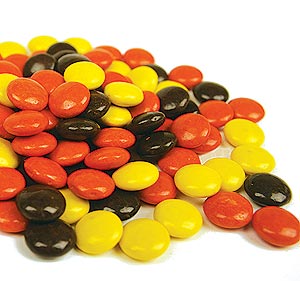
Having functional central air conditioning. Munching on Reese's Pieces after a long hiatus from purchasing them. Sipping on French Berry Sparkling Lemonade and enjoying its rosy hue and tickly fizz. Meeting with an inspirational and exuberant friend not seen in a few years. Getting lost in scintillating conversation until 5 and a half hours whiz by in an instant. Standing under a sprinkler on a muggy walk. Holding prints of photos that had only ever been previously viewed on a screen. Seeing tiny little bunnies feasting on grass, resisting the urge to scamper away even when they realized they had an audience.

Wednesday, June 2, 2010

Inspiring


This goes somewhat on the heels of my last post, but in my job I often research and come across CVs, bios, and a variety of information about folks who continued on the path of academia. Today I came across one such person, a woman who currently lives in California and owns her own floral design studio for special events such as weddings. Prior to delving into the flower business, she was a cancer biologist with a PhD from Harvard. On how she made such a dramatic career switch (taken from her company website):

"Somewhere along the line, [she] realized that life is too short and quit her job to be crafty and creative with her hands."

I found this inspiring, and it reminded me of a few things:

-Sometimes the first step is admitting to yourself what it is you really love to do, because it might not be what you originally thought or intended. It might not even be popular with the people who surround you, but if they truly care about you, they'll support your decision.

-Doing what you really love is sometimes risky, especially when starting out and especially if it's not an especially lucrative profession. That being said, any profession can be lucrative if you're quite good at it and if that matters to you.

-It's never too late to do what you love, and the sooner you can begin, the better.

Specialists vs. Generalists


A reoccurring thought in these recent days/weeks/months: what is more valuable in today's society, a person who is a specialist or a generalist? Back in the day, many people (often men) did apprenticeships and honed their skills without necessarily even receiving what we would now consider an education. This leads me to believe that those people were definitely specialists. However, I've come across mentions of individuals who were a "Jack of all trades" such as Leonardo da Vinci. According to Wikipedia, that phrase has been in use since the 1600's, which would mean it was in circulation even when apprenticing and specialization was a lifestyle for many. "Jack of all trades" was supposed to be a complement at first, noting an individual's knowledge that spanned many areas and abilities to match. However, then the clause "master of none" was added to the phrase, and in this context being a generalist ceases to be anything desirable, since it's implied that the generalist's skills and knowledge are but superficial. Currently, whether being a Jack of all trades is a complement depends entirely on the context and the implication the speaker provides.

Today, I'm tempted to say that society on the whole values specialists more than generalists (I'm not referring to doctors here, by the way--that's a whole different kettle of fish). If one goes the liberal arts route, there is something to be said for the emphasis on the holistic that those colleges and their curricula embody. The idea there is to sample from a variety of subjects to the extent possible, while still maintaining a focus on a particular area, that being one's major. So even at a liberal arts school there's a bit of the push-pull between being a specialist and generalist.

If one is fortunate enough to have the opportunity to go to college and graduate, there are then the societal pressures to go back to school almost as soon as the cap has been thrown in the air and the gown cast aside. Nowadays there are many reasons to go back to school. You may have a particular passion for a subject area and wish to study it much more in-depth. Entering future jobs at a higher pay grade doesn't hurt at all, does it? Maybe you don't know exactly what you want to do, so grad school seems like a way to stave off impending decision making. Your family may be exerting pressure on you to get a higher degree, and you decide to go that route. Perhaps you've hit a ceiling at your current job because it requires an additional level of expertise that requires further education.

Clearly there are better reasons and worse reasons to go back to school and specialize in a particular area. But what about those who don't feel the need to specialize--those who are curious about many things and shoot for a wider breadth of knowledge, even if they aren't "experts" in any of them? I wonder if this is something that society still champions. I have to admit that I don't see much emphasis on this professional style, but I do see the value in being a Jack of all trades.

The Art of Resume Writing


Having rewritten my CV a few times over, I lent what little expertise I have to my husband to help him revamp his resume as he prepares to enter the job market once again. And then it hit me--the true essence of crafting a CV. Resume writing: "How to Toot Your Own Horn without Being Ridiculously Obvious About It."

Resumes are humorous to me. Useful, clearly, but also humorous. Of course prospective employers want to know all about my fabulous skills, experiences, awards, degrees, blah blah blah. In Latin America, it's even customary to put a personal objective and colorful, positive adjectives that describe you. Obviously resumes are necessary in this day in age, and it's reasonable to expect that they be accompanied by an interview--after all, CVs are just a piece of paper. Still, sometimes I can't help feeling like resumes are a bit of a joke. Who wouldn't paint a stunning picture of themselves on their CV (while still sticking to the truth, of course)? One CV I came in contact with for some research I was doing was a whopping 62 pages! That's academia for ya. Some people don't even bother adhering to their actual work experience, although I don't happen to know any of those people personally.

While a CV will certainly highlight skills that one has developed over time, or critical work experience for a particular position, who's to say that the person produces quality work? Will they work well with the rest of their coworkers? What idiosyncrasies do they possess? What "weaknesses" will hold them back in their day-to-day activities and overall productivity?

While it's ever so fun to focus on everyone's positive qualities that they bring to the table, it's often essential to understand people's weaker points or areas that need improvement to identify a truly strong candidate for a job and a particular work environment. This is where interviews do come in handy, admittedly, but let's keep in mind that those are only a total of a couple of hours at most, even if there are multiple rounds of interviews. I suppose first impressions, instincts, vibes, and the like come into play here, in addition to how the job candidate performed overall in the interview. I recall that in my job interview for my current position, the HR worker interviewing me did ask me directly to name a few of my strengths and weaknesses. Even that's a mind game--you have to avoid the "I work too hard" suck-up weaknesses, as well as the other extreme of admitting the "I'm impatient and make tons careless mistakes" or the "I drink on the job" types of glaring flaws.

In the end, resumes will continue to be a collection of everyone's best qualities and every single skill ever cultivated in the teeniest tiniest way, and I will continue to snicker at all of us singing our own praise. Hey, maybe we even deserve it!